

The short version: Trying to sleep harder is one of the most reliable ways to prevent sleep. The mechanism – cognitive hyperarousal, conditioned wakefulness, the physiological contradiction between intention and biology – is well understood and directly treatable. What does not help is the same sleep hygiene list you have probably already tried. What does help is changing your relationship with the attempt to sleep, not with sleep itself.
This is not a problem I have lived in the clinical sense. My sleep difficulties were metabolic – food timing, light exposure, cortisol conditions – and they resolved when those inputs changed. Sleep anxiety is a different mechanism, though it often coexists with metabolic sleep disruption and can persist even after the metabolic inputs are corrected. It is common enough in the WMTWL audience, and specific enough in its mechanism, to warrant a clear explanation.
The Hyperarousal Mechanism
In people with insomnia, the brain is measurably more active during sleep than in good sleepers. This is not a metaphor. Dr Jade Wu cites a 2004 functional brain imaging study that showed higher glucose metabolism during sleep in people with insomnia AND during the day – even when objective sleep parameters looked identical to those of healthy sleepers from the outside. The brain is running hotter, not just at night, but throughout the 24-hour cycle.
This is called hyperarousal. It is the physiological state in which the stress response is chronically elevated – not dramatically, not in a way that looks like a panic attack, but enough to prevent the nervous system from crossing into genuine rest. Sophie Bostock, sleep scientist and founder of The Sleep School, describes it as a full physiological stress cascade – elevated cortisol, raised blood pressure, mobilised blood glucose – that compounds over time into immune dysregulation and sustained poor sleep.
The paradox that makes insomnia self-reinforcing is this: the harder you try to sleep, the more aroused the system becomes. Sleep is not a deliberate act. It is what happens when the nervous system is not trying to do anything. Effort – even the quiet, anxious effort of lying still and waiting for sleep – activates the sympathetic system, which is exactly the system that keeps you awake.
The Conditioned Arousal Problem
Dr Jade Wu’s research on sleep anxiety describes conditioned arousal with precision: repeated wakefulness in bed trains the brain through classical conditioning. The bed becomes a cue for wakefulness rather than sleep – exactly as Pavlov’s dogs learned to salivate at a bell rather than at food. Once the association forms, lying in bed activates the arousal system rather than allowing it to wind down.
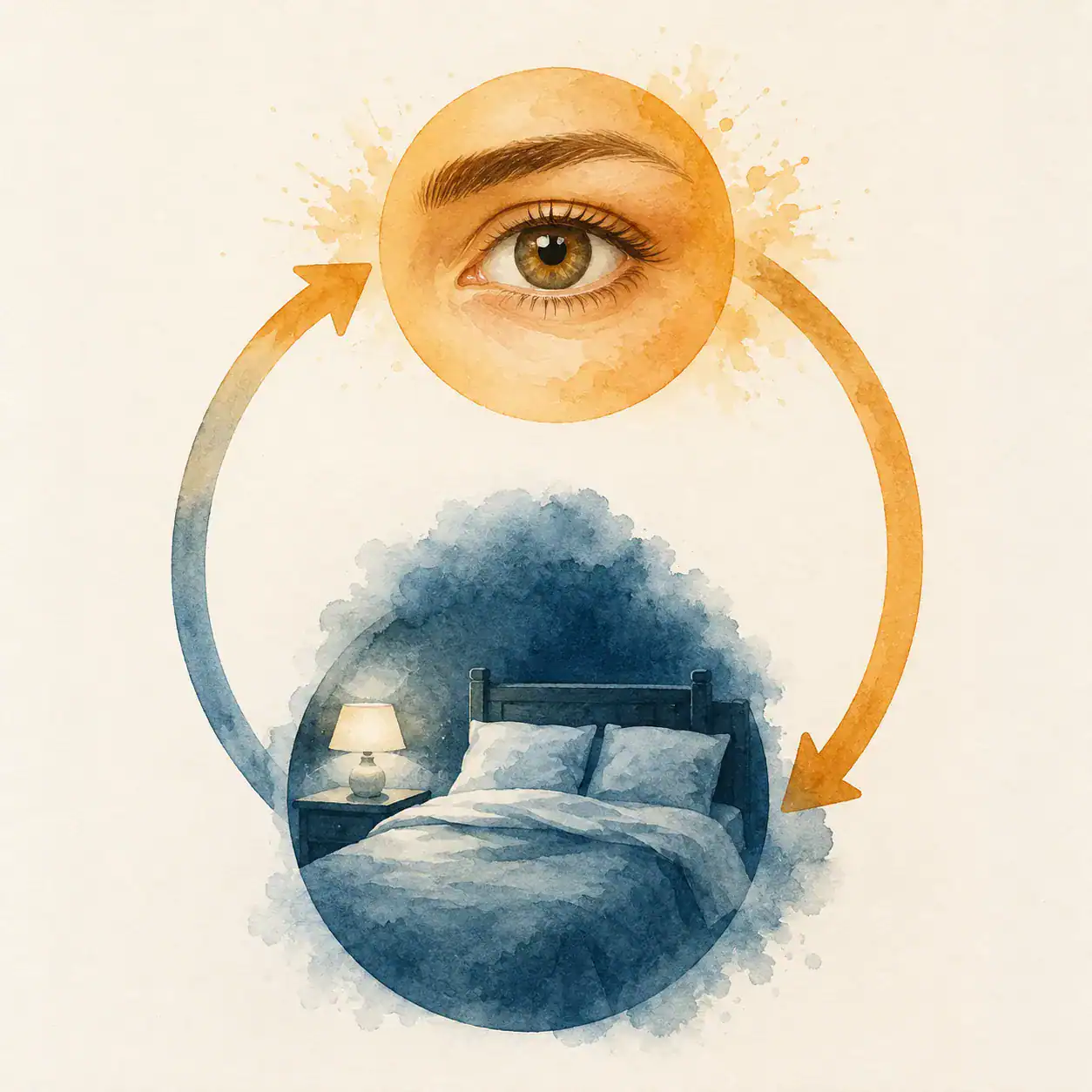
This is why telling someone to “just relax” in bed is useless advice once conditioned arousal has established. The bed is now the trigger. The relaxation instruction is fighting an automatic conditioned response that has been reinforced night after night.
The CBT-I intervention for this is specific: stimulus control . Bed is for sleep (and sex). If you are not sleeping, get up. Not to do something stimulating, but to sit quietly somewhere else until genuine sleepiness arrives. Then return to bed. This sounds counterintuitive – getting up in the middle of the night when you desperately want to sleep – but the goal is to break the bed-wakefulness association by not reinforcing it. Every night you lie awake in bed anxious about sleep, you are strengthening the conditioning. Every time you get up, you are weakening it.
Why Sleep Hygiene Lists Often Do Not Help
Dr Jade Wu makes a point worth highlighting: insomnia and sleep deprivation are not the same thing. In research, when people with insomnia were given the identical sleep pattern as healthy sleepers, they had opposite biological responses – more tension, higher body temperature, less actual sleepiness. The problem is not primarily about the sleep environment or the hours available. It is about the state of the nervous system when sleep is being attempted.
Standard sleep hygiene advice – cool bedroom, no screens, consistent bedtime – is relevant and useful for metabolic sleep disruption. It is less relevant as the primary intervention for conditioned arousal and hyperarousal, because the problem exists at the nervous system level rather than the environmental one. Following a hygiene list carefully and still not sleeping is not evidence that the list is being done wrong. It is evidence that the list is addressing the wrong mechanism.
CBT-I addresses the right mechanism. Multiple meta-analyses support it as the first-line treatment for chronic insomnia, and the American College of Physicians has recommended it over sleeping pills since 2016. It is available through NHS referral (though waiting times vary), and through online programmes that have been validated in trials.
What Actually Breaks the Loop
Three evidence-based interventions from CBT-I that target the mechanism rather than just the symptoms:
Stimulus control – bed only for sleep, get up if not sleeping within 20 minutes, return when genuinely sleepy. Rebuilds the bed-sleep association by removing the bed-wakefulness association.
Sleep restriction therapy – temporarily limiting time in bed to match actual sleep time, then gradually extending. This consolidates sleep, builds sleep pressure, and reduces the time spent lying awake anxious. It is uncomfortable in the short term and highly effective at six weeks. Dr Michael Mosley cites research showing it improved sleep efficiency from 67 percent to 87 percent in chronic insomniacs who had been on sleeping pills for 15 years, with results maintained at nine months.
Cognitive restructuring – specifically addressing the catastrophising thoughts about sleep that perpetuate the hyperarousal. “If I do not sleep tonight I will not function tomorrow” is both inaccurate (one bad night rarely catastrophically impairs function) and counterproductive (it activates the stress response at exactly the wrong moment). This is not positive thinking. It is accurate thinking replacing inaccurate thinking.
Educational content only. Not medical advice. If you are experiencing significant sleep disruption or anxiety, please speak to your GP. They can refer for CBT-I and discuss other treatment options.
The 7-Day Sleep Reset covers the metabolic inputs that reduce background arousal – eating window, cortisol taper, morning light – which can reduce the hyperarousal baseline even before a CBT-I programme begins.
Get the 7-Day Sleep Reset- Dr Jade Wu – research on hyperarousal, conditioned arousal, and the distinction between insomnia and sleep deprivation
- Sophie Bostock, The Sleep School – physiological stress cascade in chronic hyperarousal
- Dr Michael Mosley – research on sleep restriction therapy outcomes
- American College of Physicians – 2016 clinical guidance recommending CBT-I over sleeping pills
If the attempt to sleep is part of what is preventing it – what would it look like to change your relationship with the attempt rather than the sleep itself?
More in sleep-science
- What 57 Nights of Perfect Sleep Actually Did to My Biomarkers
- The Sleep Myth That Keeps Over-50s Exhausted: Why “Catching Up” at the Weekend Does Not Work
- The Bedroom Habits That Ruined My Sleep for Years (And the Four That Fixed It)
- “I Sleep 8 Hours But Still Feel Exhausted”: Why the Hours Are Not the Problem
