
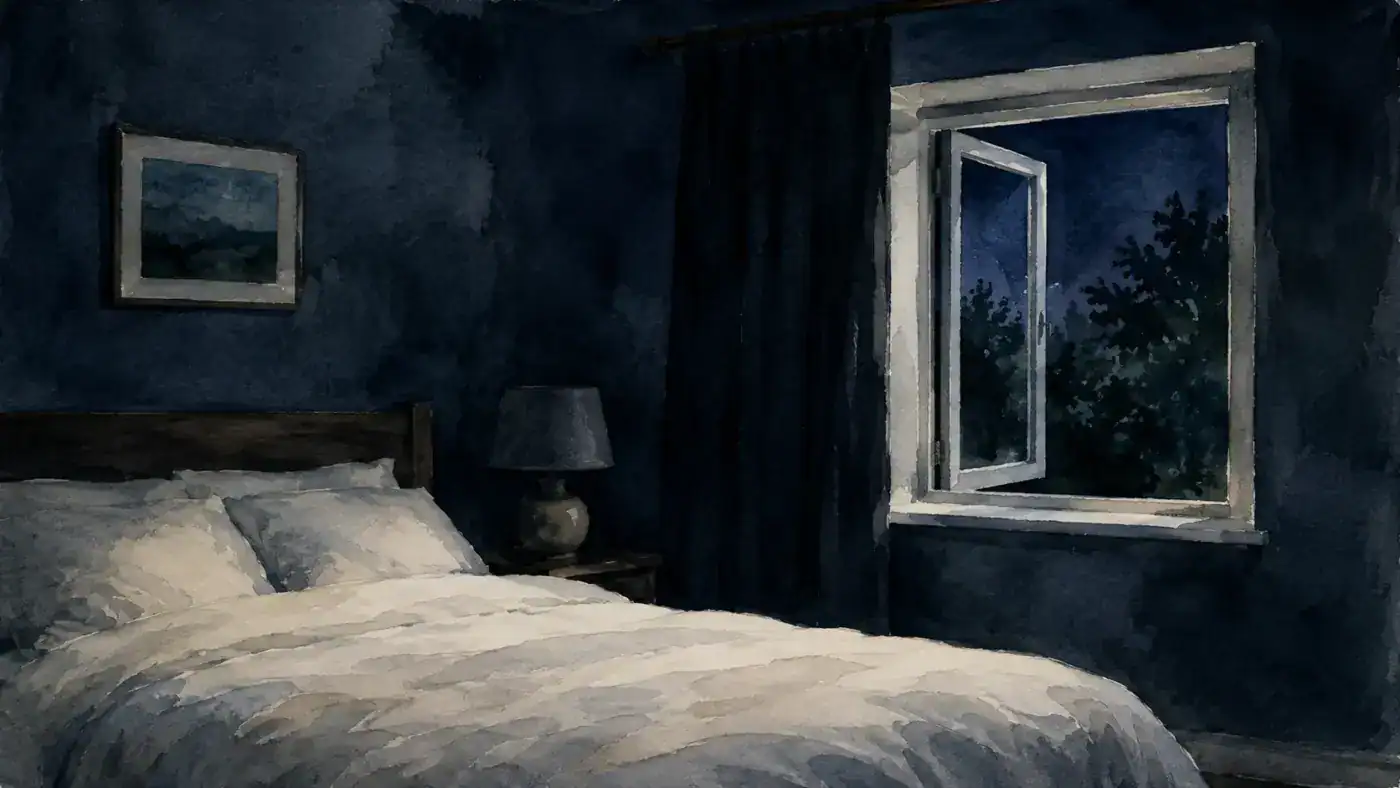
The short version: Most bedroom environments in the UK actively work against deep sleep. Too warm, too lit, screens present, window closed. Four specific changes – temperature, darkness, no screens, consistent window – removed those obstacles and let the body’s sleep system do what it had been trying to do all along. The body did not need help sleeping. It needed help stopping the things that were preventing it.
Before I changed anything deliberately, my bedroom at night was: approximately 20 to 22 degrees, central heating on, a lamp beside the bed, television in the corner, phone charging on the bedside table. Standard UK bedroom arrangement, probably similar to yours.
Sleep quality: 5 to 7 out of 10 most nights. Not terrible. Not right.
I changed the eating window first. The sleep improved. But when I looked back at the nights that had scored 9 or 10 through 2025, there were four bedroom variables that reliably correlated with the higher scores.
Change 1: The Temperature
Room: 17°C for sleeping. This is cooler than most centrally heated UK bedrooms. It was the change that felt most counterintuitive before I tried it and most obvious in retrospect.
The body needs its core temperature to fall to initiate deep sleep. The fall happens through peripheral vasodilation – blood vessels in the hands and feet widening to release heat. A warm room works against this directly. You are lying in an environment that is trying to prevent your body from doing the one thing it needs to do to cross into slow-wave sleep.
The practical solution: window open slightly, even in winter. Or heating off an hour before bed. Or lighter bedding combined with a cooler room – the goal is cold head, warm body in the bed itself. It sounds uncomfortable until you try it for two or three nights. After that, the warm bedroom starts feeling like the uncomfortable option.
Change 2: The Darkness
Blackout. Not dim – black. Even a small amount of light reaching the eyes during sleep suppresses melatonin and activates the arousal system. Shawn Stevenson’s research finding is striking: exposure to room light during normal sleeping hours suppresses melatonin levels by more than 50 percent. Melatonin does not just help you fall asleep – it governs the depth and duration of slow-wave sleep through the night. A 50 percent suppression from ambient light is not a minor effect.
A good blackout blind or curtain deals with streetlight and early summer mornings. A sleep mask does the same with less installation. I use the blackout approach rather than a mask because the mask interferes with the airflow around the face, which has its own small temperature regulation effect.
The phone screen in the middle of the night is a specific version of this problem. Even briefly glancing at the screen in a 3am waking introduces a melatonin reset at exactly the most fragile point of the night. The phone moved to another room – that resolved it.
Change 3: No Screens After 8pm
I have covered the blue light mechanism elsewhere, but the practical implementation is worth being specific about here. The 8pm curfew means: no television, no phone, no laptop. The alternatives were, in practice, a book, conversation, a short walk, radio. None of these required effort to substitute once the habit was established.
The lamp in the bedroom is part of this. Overhead ceiling lights produce enough lux to act as a meaningful melatonin suppressant in the hour before bed. I switched to a single side lamp on a dimmer for the period between the screen curfew and going to bed. The lower light level in the bedroom from 8pm onwards gave the melatonin signal an earlier, cleaner rise.
The combination matters: screens off and ambient light reduced. Either alone produced some improvement. Both together produced more.
Change 4: Window Open, Consistent
A small but consistent change. Air movement helps with temperature regulation. An open window also brings in the outside temperature, which through most of the UK year is cooler than an internally heated room. Even a few centimetres’ worth of open window produced enough airflow to keep the room closer to the target temperature without requiring the heating to be fully off.
This also helps with CO2 levels. A sealed room with a sleeping adult gradually accumulates CO2 through the night. Rising CO2 levels disrupt sleep architecture in a way that is mostly unmeasurable on a consumer tracker but has been documented in controlled research. Open window, fresh air, consistent temperature. Simple version: less stuffy means better sleep.
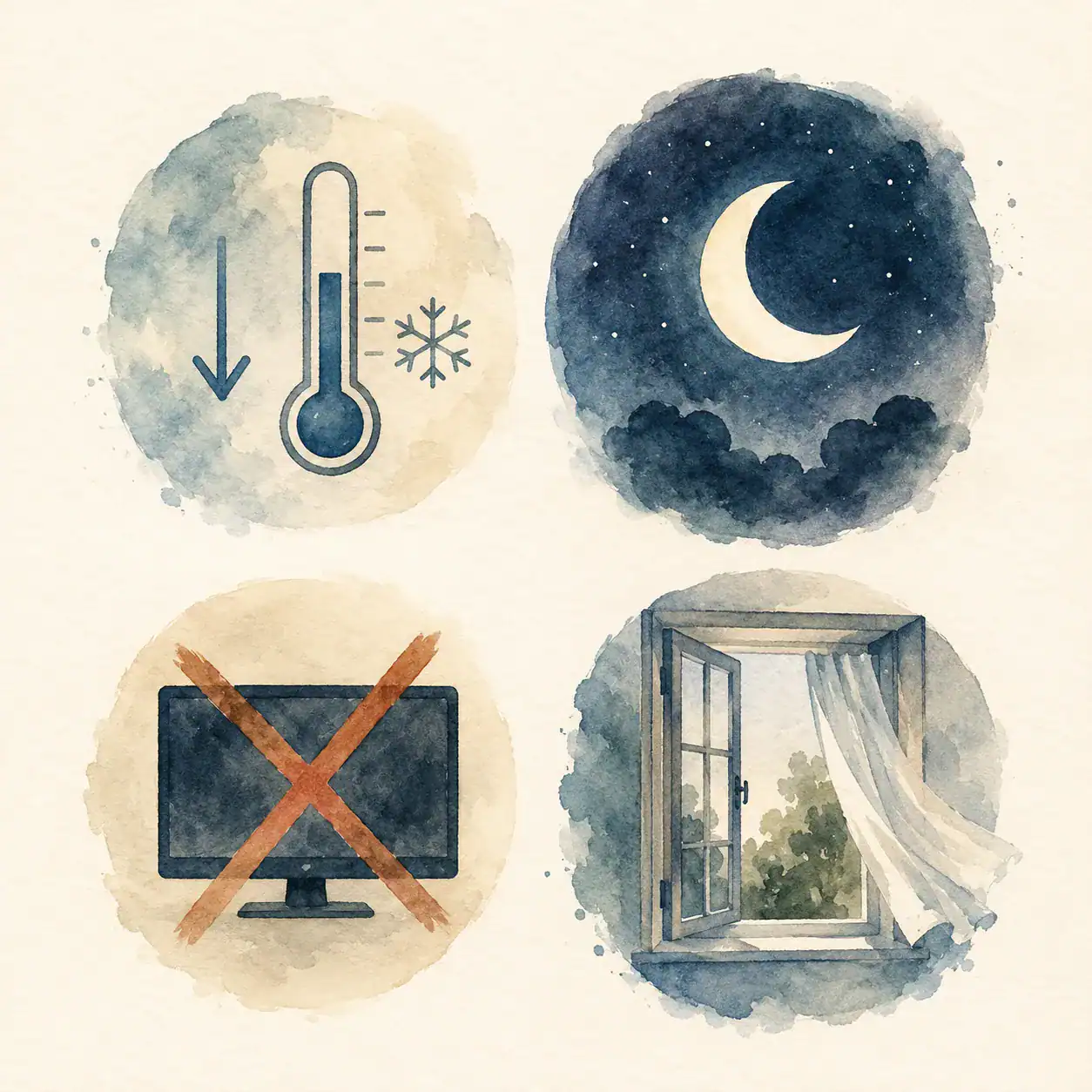
What These Four Things Share
None of them target sleep directly. All of them remove obstacles to sleep.
Temperature change: removes the obstacle of a warm room fighting the thermoregulatory drop that initiates deep sleep. Darkness: removes the obstacle of light suppressing melatonin during the night. Screen curfew: removes the obstacle of blue light delaying the melatonin rise in the first place. Open window: removes the obstacle of a sealed, warm, stuffy environment that the body’s systems have to work against.
I used to think better sleep meant doing something better. Turns out it meant stopping doing four things badly. The body already knew how to sleep. It just needed the obstacles cleared.
By May 2024, when I woke naturally before the alarm for the first time in years, I had not added a single sleep intervention. I had removed several ongoing interferences. The distinction is the important one.
Of these four – temperature, darkness, screen curfew, open window – which one is furthest from what your bedroom currently does? That is probably the first one worth testing.
Educational content only. Not medical advice. Speak to your GP if you are experiencing persistent sleep disruption.
The 7-Day Sleep Reset opens with a bedroom audit – these four variables are what it checks first, because they are the highest-leverage and lowest-effort changes in the programme.
Start the 7-Day Sleep Reset