
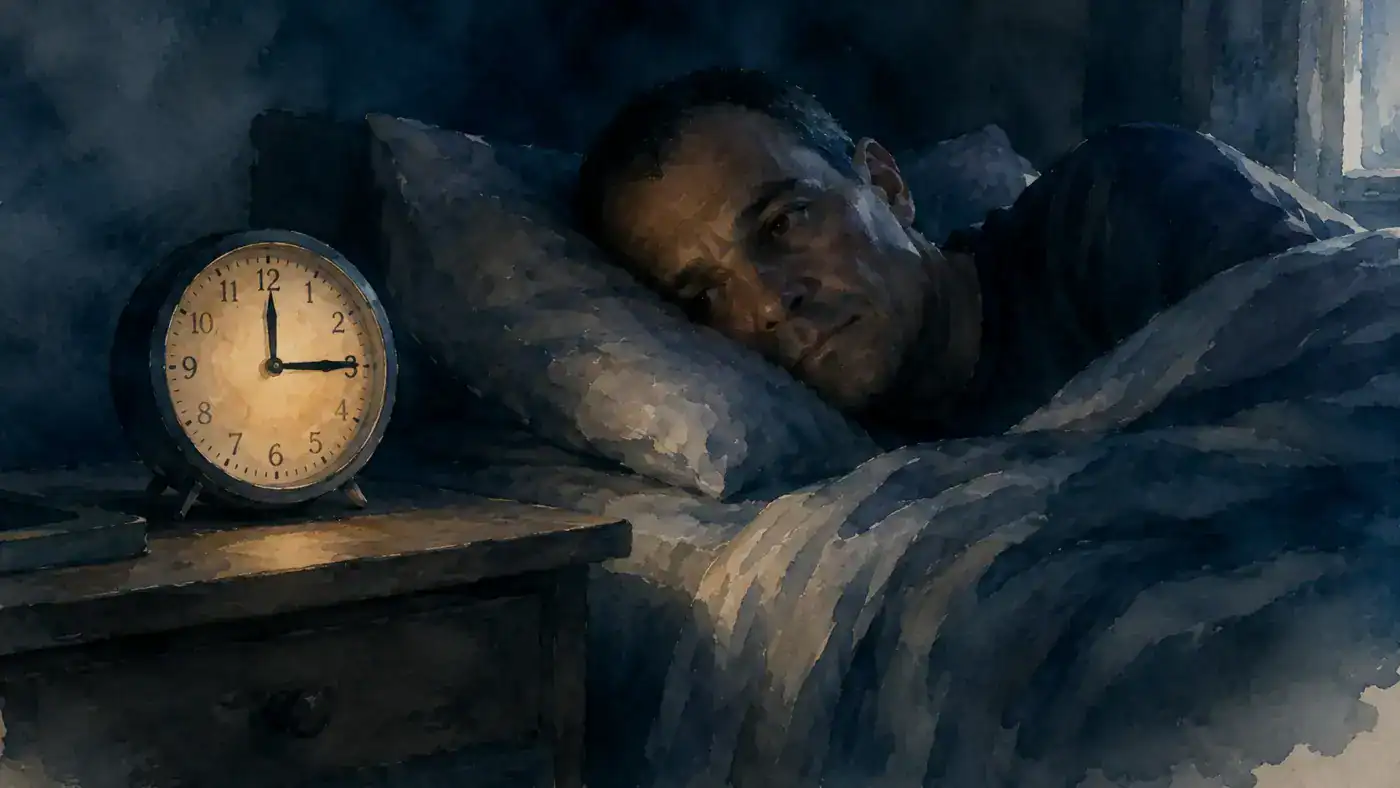
The short version: Waking at 3am is not random and it is not insomnia in the clinical sense for most people. It is a predictable feature of how sleep architecture changes after 50 – a narrower deep-sleep window, a more fragile second half of the night, and a biological shift in the timing of when cortisol and blood sugar move. Understanding why it happens changes what you do about it.
I have not personally experienced the kind of chronic 3am waking that many people over 50 describe as the defining feature of their sleep. My data shows it differently – the fasting-related sleep disruptions I experienced during extended fasts were a different mechanism. But the 3am pattern is too common, and too specific, for me to leave it buried in a footnote. So this is me going through the research carefully and putting it in plain English, the same way I do with anything important enough to warrant attention. What I cannot give you is the first-person story. What I can give you is the mechanism.
What Sleep Architecture Actually Looks Like After 50
Sleep is not one continuous state. It cycles through stages – light NREM, deep NREM (slow-wave sleep), and REM – in roughly 90-minute blocks through the night. The first half of the night is dominated by deep slow-wave sleep. The second half shifts toward lighter NREM and REM sleep.
This matters because the shift in sleep architecture after 50 does not affect the whole night equally. Jeanne Duffy’s circadian research is specific about this: older adults become more vulnerable to sleep disruption in the latter half of the night, regardless of how much sleep they have already accumulated. The second-half vulnerability is not random – it follows directly from reduced deep sleep in the first third of the night and the narrowing of the circadian window during which restorative sleep is possible.
Laura King at the University of Missouri puts a precise number on the trajectory: sleep architecture shifts with age from the forties – less deep sleep, more night waking, earlier natural bedtimes – and changes in sleep duration across five years in middle age are linked directly to cognitive decline in memory and problem-solving. The changes are not dramatic year to year. They compound across a decade.
What does this mean practically? If the first three hours of your night are doing the job they are supposed to do, the second half is usually fine. If they are not – if the deep-sleep window has been disrupted by late eating, warm temperatures, elevated cortisol, or alcohol – the second half becomes fragile in ways that feel random but are actually quite predictable.
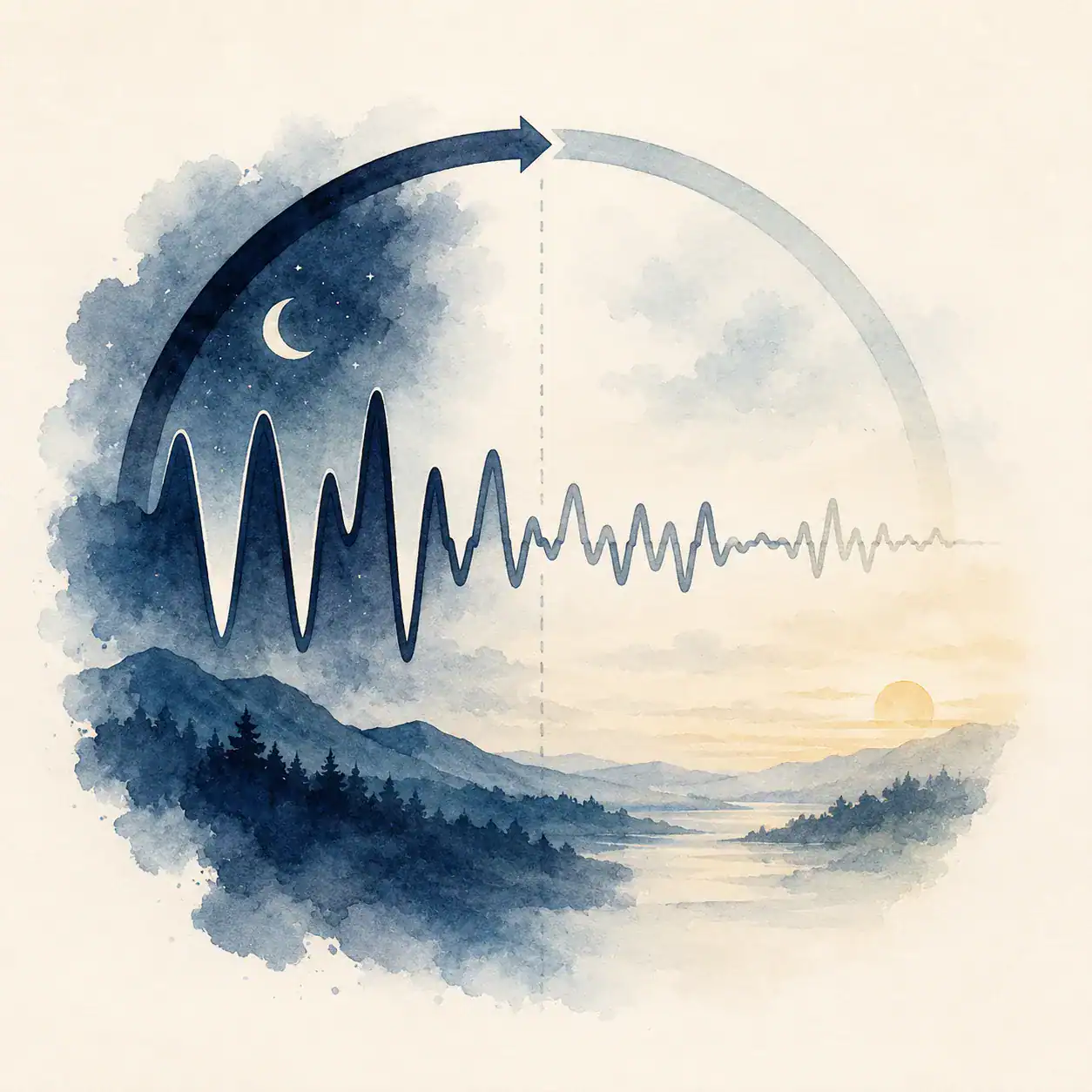
The Specific Biology of the 3am Wake
The 3 to 4am window is not arbitrary. Several biological signals converge around that time in ways that make it a particularly common point of waking for adults over 50.
Cortisol begins its morning rise. Cortisol follows a circadian arc: lowest around midnight, rising through the early hours, reaching its peak shortly after waking. For older adults, that early morning rise can begin sooner, which means the cortisol signal arrives while it is still dark and the body is not ready to accept it as morning. The result: partial waking, a racing quality to the mind, difficulty settling back into sleep.
Blood sugar drops trigger a glucose response. Izabella Wentz’s research describes this mechanism directly: when blood sugar drops during sleep, the body releases cortisol to stimulate glucose production. The cortisol spike wakes the person. This is often misidentified as insomnia, anxiety, or a sleep disorder, when it is actually a blood sugar event. The pattern is especially common in people with insulin resistance or those who ate a high-carbohydrate meal close to bedtime.
Alcohol disrupts the second half of the night. Professor David Nutt at Imperial College London has written clearly on this: alcohol causes initial drowsiness by depressing the central nervous system, but as blood alcohol levels fall it activates a glutamate rebound – essentially a period of neurological hyperactivity – that reliably produces waking at three to four in the morning. Even three units of alcohol is sufficient to disrupt second-half sleep architecture in this way. Many people who drink a glass of wine most evenings experience 3am waking and never connect the two.
The REM rebound effect. Once the deep-sleep phases of the early night are complete, the brain enters longer REM cycles – the lighter, dreaming sleep that produces the kind of partial waking state in which noise, light, or a passing thought can bring you to full consciousness more easily. After 50, the transition into these lighter cycles happens earlier relative to waking, leaving a longer window of vulnerable sleep in the pre-dawn hours.
Why Lying There Worrying About It Makes It Worse
There is a specific mechanism that turns occasional 3am waking into a persistent pattern: conditioned arousal. Dr Jade Wu, a board-certified behavioural sleep medicine specialist, describes it precisely: repeated wakefulness in bed trains the brain through classical conditioning. The bed becomes a cue for wakefulness rather than sleep, exactly as Pavlov’s dogs learned to salivate at a bell.
Once that association forms, the body begins anticipating waking at 3am. Cortisol may begin rising slightly earlier than it otherwise would. The system that was originally waking from blood sugar or cortisol begins waking in advance of those signals, because the brain has learned that this is what beds at this hour produce.
This is why the advice “just don’t worry about it” is both correct and useless without the rest of the explanation. The worry is not causing the waking. But the pattern of waking, worrying, and lying awake is causing the pattern to strengthen. The intervention is behavioural rather than chemical: breaking the conditioned association between bed and wakefulness at that hour, which typically requires either getting up briefly or deliberately not reinforcing the wakefulness with anxious attention.
The Inputs That Make 3am Waking Worse
Based on the research, the most consistent drivers of 3am waking in adults over 50 are:
A late eating window, particularly one involving high-carbohydrate foods, which creates the blood sugar drop-and-recovery cycle in the early hours. Closing the eating window earlier removes the trigger.
Alcohol in the evening, which produces the glutamate rebound reliably at three to four hours after drinking. Even moderate drinking has this effect on second-half sleep architecture.
Elevated cortisol going into the night – from unresolved stress loops, late screen use, or the structural cortisol rise that comes with age – which means the morning cortisol arc begins from a higher floor and arrives earlier.
A warm bedroom, which prevents the core temperature drop that sustains deep sleep in the first half of the night, leaving the second half with less recovery work already done and therefore more vulnerable to disturbance.
None of these are sleep disorders. They are inputs to sleep quality that are worth understanding and modifying one at a time.
Educational content only. Not medical advice. If you are experiencing persistent sleep disruption, significant daytime fatigue, or symptoms that suggest sleep apnoea, speak to your GP.
The 7-Day Sleep Reset addresses the conditions that make 3am waking more likely – particularly the eating window and the evening cortisol taper.
Get the 7-Day Sleep ResetThis article sits under our Sleep Foundation cornerstone.
So if you know the 3am wake is biology, not your mind failing you – the question becomes which input is driving it tonight?
- Jeanne Duffy – circadian research on age-related sleep disruption in the second half of the night
- Laura King, University of Missouri – research on sleep duration changes and cognitive decline in middle age
- Izabella Wentz – research on blood sugar decline and the cortisol-glucose response during sleep
- Professor David Nutt, Imperial College London – research on alcohol’s effect on second-half sleep architecture
- Dr Jade Wu – behavioural sleep medicine research on conditioned arousal
More in sleep-science
- What 57 Nights of Perfect Sleep Actually Did to My Biomarkers
- The Sleep Myth That Keeps Over-50s Exhausted: Why “Catching Up” at the Weekend Does Not Work
- The Bedroom Habits That Ruined My Sleep for Years (And the Four That Fixed It)
- “I Sleep 8 Hours But Still Feel Exhausted”: Why the Hours Are Not the Problem
