MECHANISM ENGINE

What Is Chronotype?
Eighteen years running a kitchen business taught me plenty about people’s natural rhythms before I ever looked at a sleep chart. Some staff were in at 6am, kettle on, sharp as anything. Others were half-asleep until 10am and then somehow still going strong at midnight service. I used to put that down to laziness in some of them. Turns out that’s not what’s going on at all.
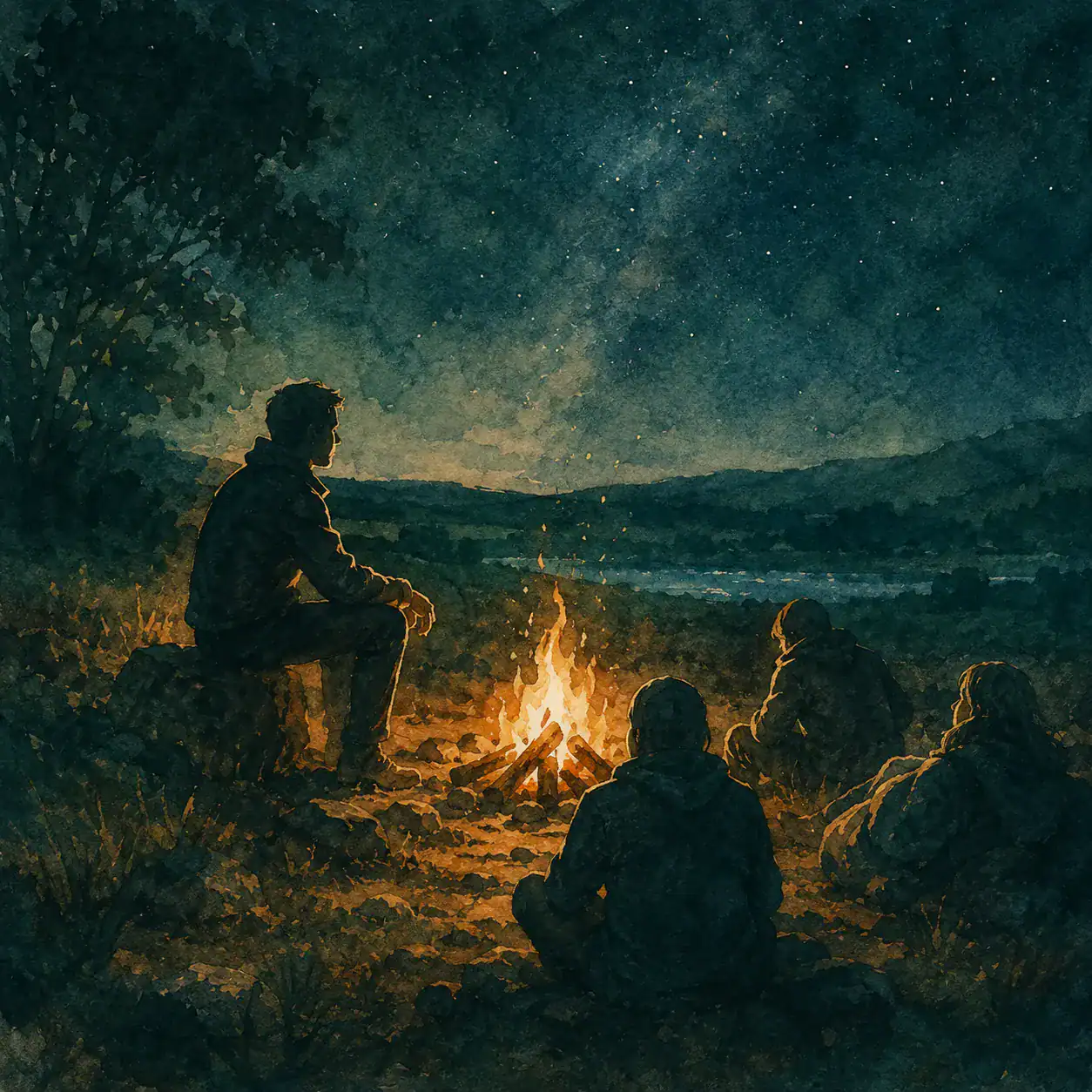
The Cave Watch Rota
Picture a group of early humans sat round a fire for the night. Someone needs to be sharp at dawn. Someone needs to be awake at midnight. Someone needs to be switched on mid-morning. If the whole group fell asleep and woke up at exactly the same time, every single night was a risk, nobody on watch for half of it. Chronotype, whether you’re naturally an early riser or a night owl, isn’t a fault in the system. It’s a rota. Different people covering different shifts so the whole group is never caught out. The person who can’t nod off before midnight isn’t failing at being a morning person. They’re covering the late watch.
Chronotype describes a person’s natural inclination toward earlier or later sleep and wake times, sitting on a spectrum from a strong “morning lark” to a strong “night owl”, with most people falling somewhere in between. It’s shaped by genetics, age, and light exposure, and tends to drift later through the teenage years before shifting earlier again with age. It’s distinct from circadian rhythm itself; chronotype is the personal setting on that internal clock, not the clock mechanism.
Research on chronotype consistently finds that working, eating, or exercising against your natural chronotype, sometimes called social jetlag, is linked to poorer sleep quality and metabolic markers, which is one reason NHS sleep guidance focuses on consistency with your own pattern rather than forcing an ideal bedtime that doesn’t fit you.
Articles referencing this concept will populate here automatically as the Library builds.
Related mechanisms
- What Is Circadian Rhythm?
- What Is the Suprachiasmatic Nucleus?
- What Is Adenosine?
- What Is Slow-Wave Sleep?
Educational only, not medical advice. Speak to your GP before changing your fasting pattern, diet, or medication.
Get the Free 14-Day Rhythm Reset Guide
What this is based on
NHS and NICE guidance, cross-referenced against Neil’s own NHS blood test record going back to April 2012. See the full timeline and current numbers.