
MECHANISM ENGINE

What Is Slow-Wave Sleep?
For years I judged a night’s sleep purely on hours logged. Eight hours in bed, job done. Took me a while to realise that number was hiding the actual question, how much of that was proper deep sleep, not just time spent horizontal.
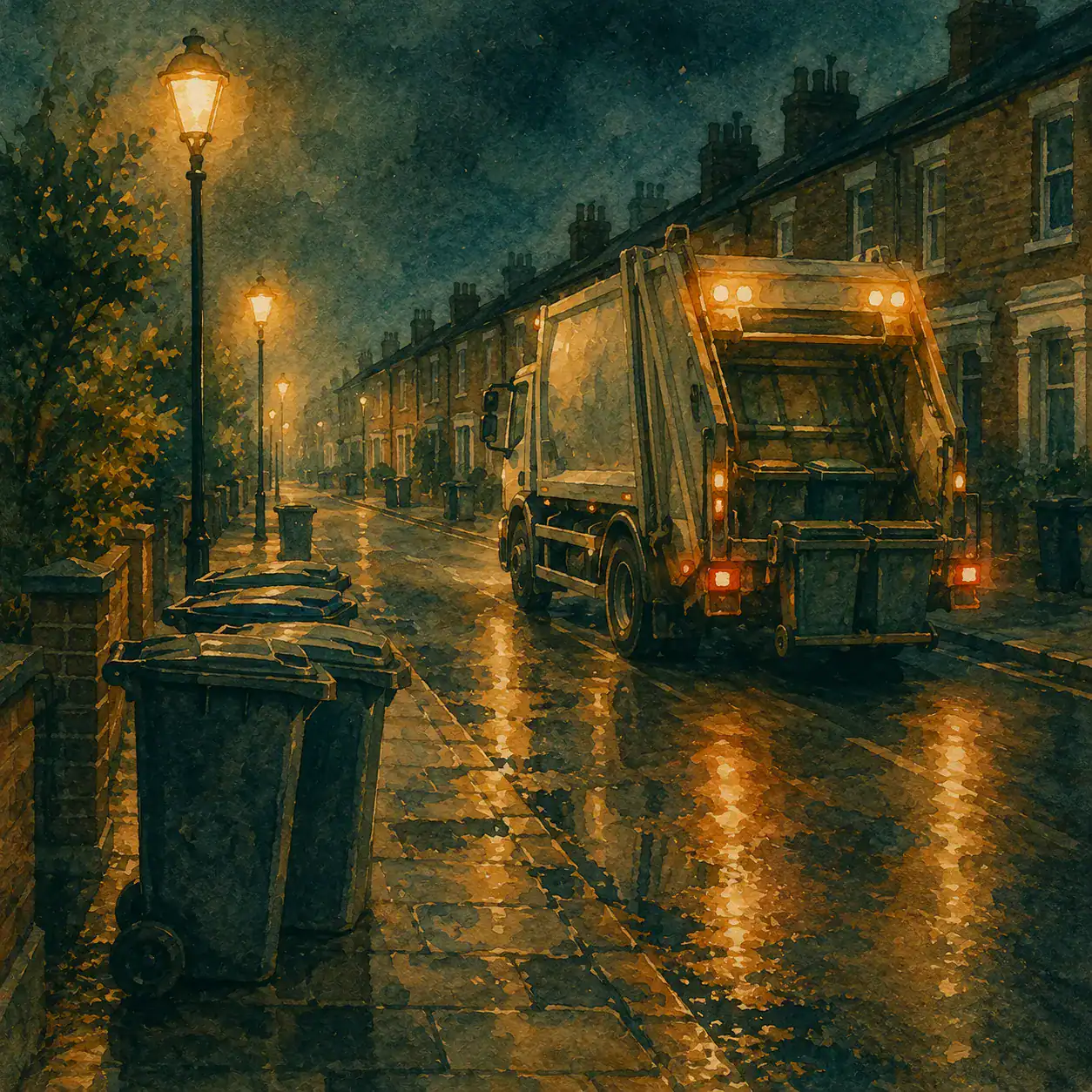
The Bin Lorry Rounds
Deep sleep is when the council bin lorry does its rounds in your brain. All day, your brain’s been accumulating rubbish, dead cells, metabolic waste, the sticky proteins linked to dementia risk. Deep sleep is the lorry driving through, clearing the lot, hosing down the street. Miss it, light sleep only, or a run of five-hour nights, and the rubbish piles up. Week after week. Year after year. It doesn’t announce itself. It just quietly stacks up until the bins haven’t been emptied properly in years.
Slow-wave sleep is the deepest stage of non-REM sleep, marked by slow, synchronised brain wave activity. It’s when most physical restoration happens, tissue repair, growth hormone release, and clearance of metabolic waste from the brain via the glymphatic system. It’s concentrated earlier in the night and naturally reduces with age, which is one reason older adults often report lighter, more easily disrupted sleep.
NHS and sleep-research sources both link insufficient slow-wave sleep to poorer next-day recovery and, over the longer term, to some of the same metabolic markers WMTWL tracks elsewhere, including insulin sensitivity, which is why total hours in bed doesn’t tell the whole story on its own.
Articles referencing this concept will populate here automatically as the Library builds.
Related mechanisms
- What Is Adenosine?
- What Is Circadian Rhythm?
- What Is the Suprachiasmatic Nucleus?
- What Is Vagal Tone?
Educational only, not medical advice. Speak to your GP before changing your fasting pattern, diet, or medication.
Get the Free 14-Day Rhythm Reset Guide
What this is based on
NHS and NICE guidance, cross-referenced against Neil’s own NHS blood test record going back to April 2012. See the full timeline and current numbers.