
What 57 Nights of Perfect Sleep Actually Did to My Biomarkers
The short version: Sleep is not a passive background variable in metabolic health. It is an active input. The same 14-month period in which my sleep quality moved from consistently middling to 57 tracked nights of 9 to 10 out of 10 was also the period in which my HbA1c dropped from 47 to 37, my CRP fell by 84 percent, my liver enzymes returned to their lowest recorded level, and eight biomarkers improved simultaneously. I cannot separate the variables perfectly. I can tell you what the pattern looked like from the inside.
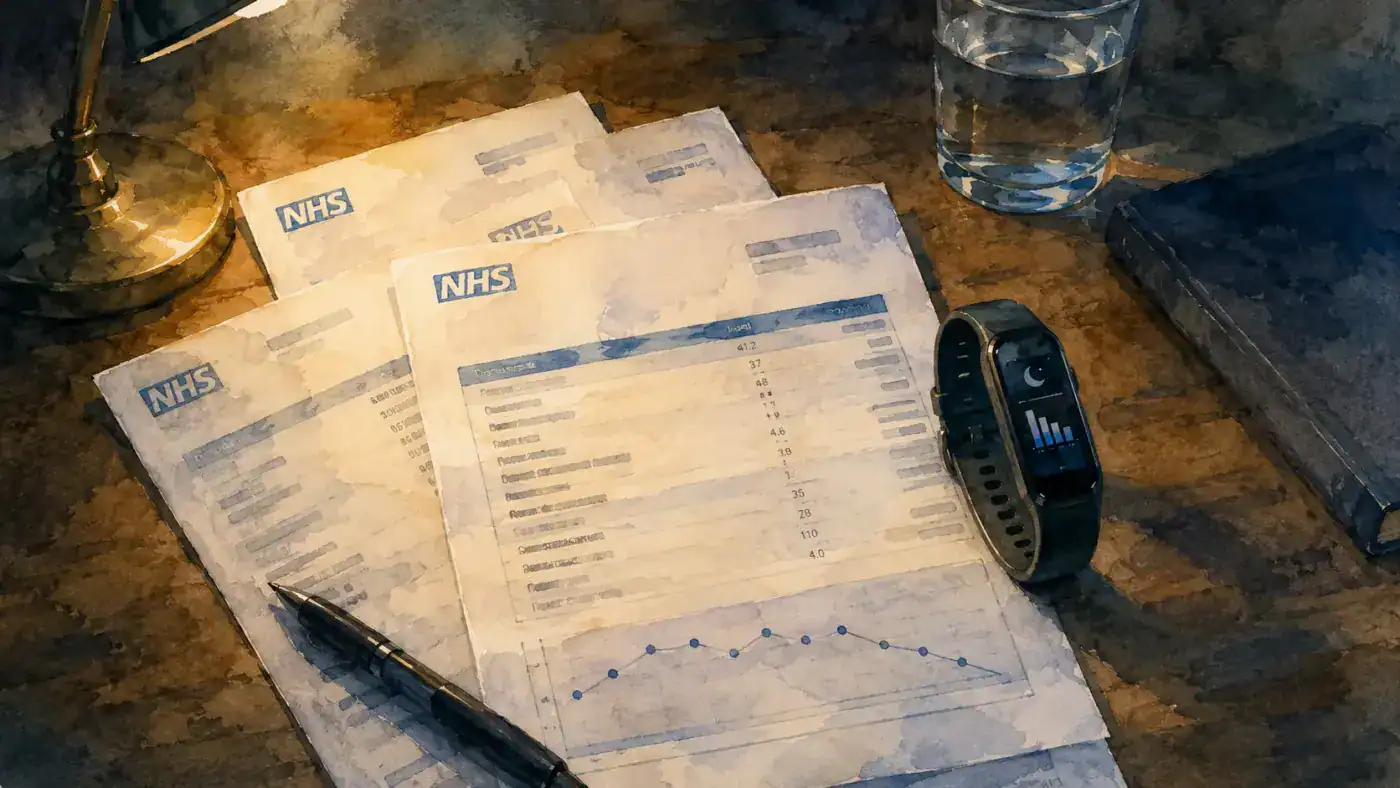
In April 2025, my GP looked at my blood results and said something that had not happened across the whole record of these appointments: everything was in optimal range. Not “satisfactory,” not “we will keep an eye on it” – optimal. HbA1c 37. CRP 1.0. ALT 23, the lowest it had been in my entire NHS dataset. Kidney function excellent.
I had been off all six medications since February 2024. The fasting, the non-UPF eating, the movement – those were the interventions I had been making. But sleep was threaded through all of it in ways I could see in the data once I started looking.
The Sleep-HbA1c Connection
Matthew Walker’s research is specific: a single night of four to five hours of sleep creates insulin resistance equivalent to early type 2 diabetes within days. Benjamin Bikman at Brigham Young University found that just one week of insufficient sleep makes the body approximately 30 percent more insulin resistant. Peter Attia cites nine separate studies confirming sleep deprivation increases insulin resistance by up to one third.
My HbA1c in October 2022 was 47 mmol/mol – one point from a diabetes diagnosis. By April 2025 it was 37, the lowest on record. The reduction was 21 percent over 14 months, a reversal rate the research characterises as 16 times faster than my previous deterioration rate on medication.
The primary drivers were fasting and non-UPF eating. But sleep runs alongside both as a mechanism, not a side effect. Poor sleep raises insulin resistance. Poor sleep raises cortisol. Elevated cortisol directly interferes with glucose metabolism and drives fat storage to the visceral region. A body that is sleeping well is a body that is handling glucose better by default, before any dietary intervention begins.
When sleep quality improved – and it improved substantially through 2024 and into 2025 – one of the things that improved with it was the overnight insulin recovery. The body has fewer hours of elevated insulin, more time in the low-insulin state that allows HbA1c to fall, and a cortisol pattern that is not chronically interrupting the glucose metabolism through the night.
The Sleep-CRP Connection
My CRP in January 2025 was 6.2 mg/L – elevated but within the reference range, which is part of why it had gone unaddressed for so long. By April 2025, it was 1.0 mg/L: an 84 percent reduction in three months. Richard Davidson’s research at the University of Wisconsin identified that genes activated during sleep transitions are involved in inflammation – deep sleep has a direct anti-inflammatory effect at the gene expression level. Sophie Bostock’s work confirms the downstream consequence: chronic poor sleep is directly linked to increased risk of hypertension, chronic inflammation, immune dysregulation, and heart disease.
I cannot claim my sleep improvement caused the CRP reduction. The concurrent changes were too numerous for that level of attribution. But I can say the timing was consistent: the sleep quality improvement and the inflammation reduction moved in the same direction over the same 14-month period, and the mechanism connecting them is biologically well-established.
The Sleep-ALT Connection
My liver enzymes (ALT) were at 69 iu/L in December 2023 – 173 percent of the upper limit, a consequence of eleven years on statins. One month after stopping statins in February 2024, they dropped to 28. By April 2025 they were 23 – the lowest ever recorded in my data going back to 2012set.
The sleep connection here is less direct but still relevant. The liver has its own circadian clock. It performs its peak detoxification and repair work at specific times of the circadian cycle – predominantly in the overnight fasting window. Poor sleep, fragmented sleep, or sleep at the wrong time relative to the circadian clock reduces the liver’s repair window. Improving sleep quality and anchoring it to a consistent overnight window – combined with the fasting window that gives the liver the low-insulin environment it needs to work in – created better conditions for liver recovery alongside the cessation of the statin load.
The Eight Biomarkers Pattern
What I found most useful in the April 2025 blood results was not any individual number. It was the pattern of eight biomarkers improving simultaneously: HbA1c, CRP, ALT, HDL cholesterol, LDL cholesterol, cholesterol-to-HDL ratio, bilirubin, and creatinine. No single intervention produces that breadth of improvement. It suggests one upstream mechanism improving downstream in many directions at once.
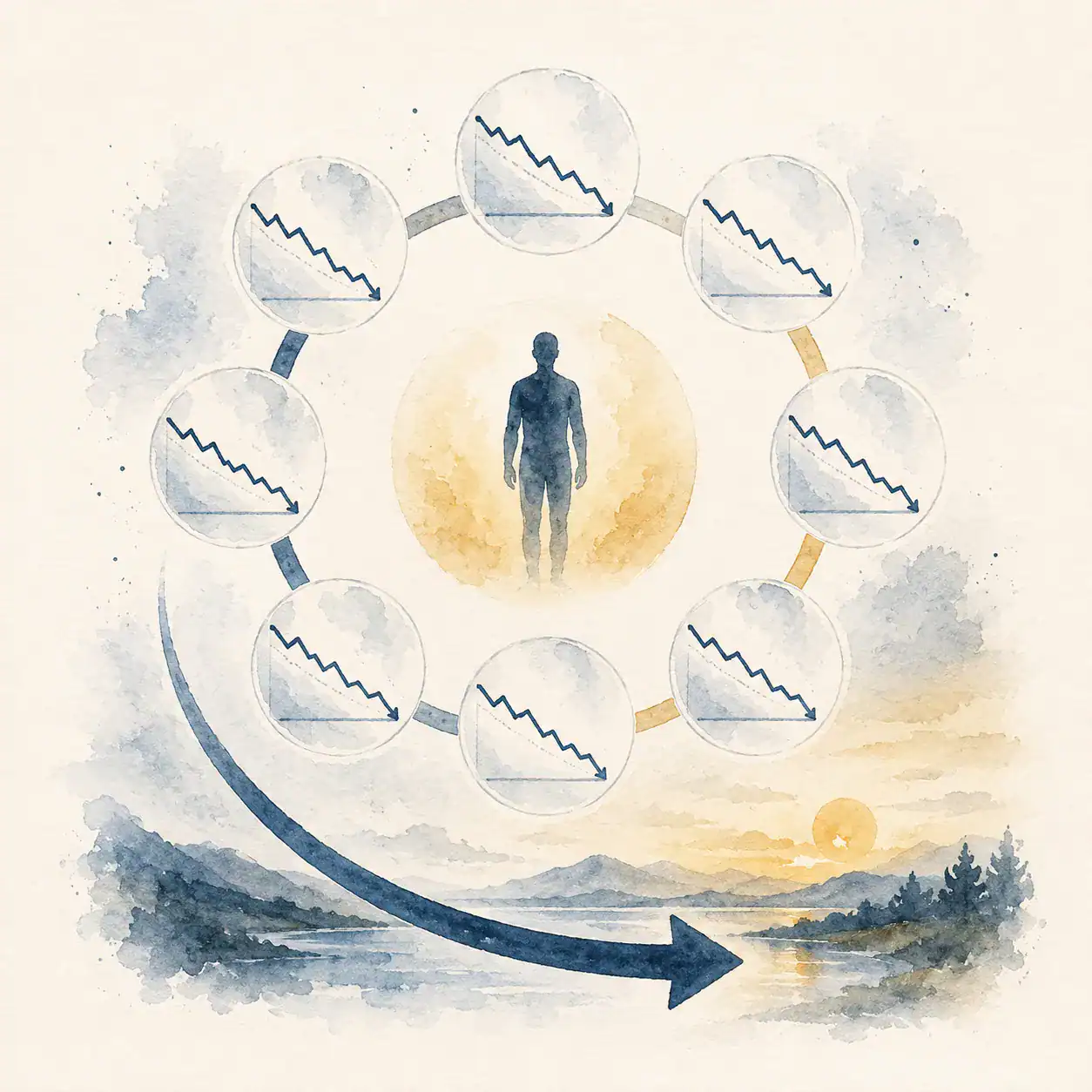
My working hypothesis – and it is a hypothesis from an N=1 dataset rather than a clinical conclusion – is that the upstream mechanism was the combination of reduced insulin resistance and reduced systemic inflammation. Sleep quality was a contributor to both. Not the sole contributor. But present in the mechanism, through the pathways described above: sleep reducing insulin resistance, sleep reducing inflammatory gene expression, sleep allowing the organs to complete their circadian repair cycles.
The body does not treat sleep and metabolic health as separate departments. The same inputs that produce better sleep produce better biomarkers. The direction of travel is the same, and the two reinforce each other in a direction I would not have predicted from where I started in December 2023.
What This Means for the Sleep-First Argument
Matthew Walker makes a case I find compelling from my own data: sleep is the foundation on which both exercise and nutrition sit. Not a third pillar – the base layer that everything else depends on. A body that is sleeping well handles glucose better, manages inflammation more effectively, and recovers from movement more efficiently. The interventions I made to eating and fasting were doing something. But they were landing in a body that was progressively better at using them as the sleep improved.
If I were advising someone starting from where I was in late 2023 – six medications, HbA1c at 47, CRP elevated, sleep consistently mediocre – I would not tell them to fix sleep before everything else. I would tell them the things most likely to improve their sleep are the same things most likely to improve their metabolic health. You fix them together, not sequentially. The fasting window improves sleep by changing the insulin-melatonin competition. Better sleep improves the fasting protocol by reducing the ghrelin signal that makes fasting harder. The circle runs in the right direction once it starts moving.
Fifty-seven nights of 9 to 10 out of 10. All in the records. Not an intervention. A consequence of conditions.
Educational content only. Not medical advice. Blood test interpretations and health decisions must involve your GP. My biomarker data is a documented personal case study, not a clinical claim about outcomes for others.
- Matthew Walker – sleep and insulin resistance research
- Benjamin Bikman, Brigham Young University – sleep deprivation and insulin resistance
- Peter Attia – sleep deprivation and insulin resistance research review
- Richard Davidson, University of Wisconsin – sleep and inflammatory gene expression
- Sophie Bostock – sleep quality and chronic disease risk
The 7-Day Sleep Reset is the entry point to the conditions that produced those results – the environmental inputs, the circadian anchors, and the eating window changes that the biomarker data reflected.
If sleep is one of the inputs that moves your HbA1c and CRP in the right direction – and the research suggests it is – what would a consistent improvement in your sleep conditions be worth in the blood test data at your next GP appointment?
Start the 7-Day Sleep ResetMore in sleep-science
- The Sleep Myth That Keeps Over-50s Exhausted: Why “Catching Up” at the Weekend Does Not Work
- The Bedroom Habits That Ruined My Sleep for Years (And the Four That Fixed It)
- “I Sleep 8 Hours But Still Feel Exhausted”: Why the Hours Are Not the Problem
- Sleep Medication After 50: What Nobody Tells You About Long-Term Use
