
MECHANISM ENGINE
What Is HRV (Heart Rate Variability)?

This one confused me at first, because it sounds backward. You’d think a perfectly steady, regular heartbeat would be the healthy sign. It’s actually the opposite. Steady and rigid is the warning sign, not the reassurance.
The Healthy Squiggle
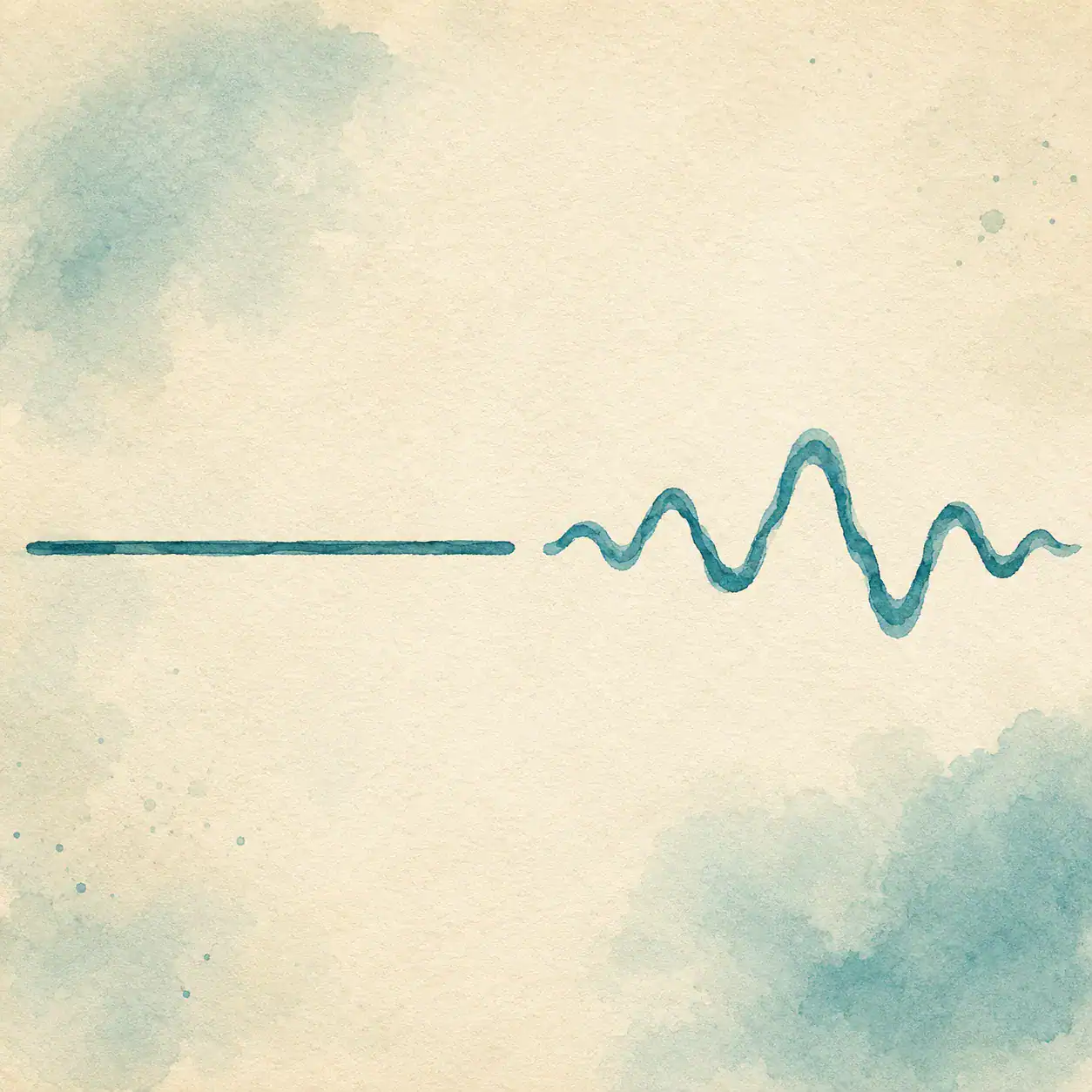
A healthy heart doesn’t beat like a metronome, dead even, exactly the same gap every time. It beats like a squiggle, constantly, subtly adjusting the gap between beats in response to breath, stress, digestion, everything going on underneath. That squiggle is the sign of a nervous system that’s alert, responsive, and able to shift gear when it needs to. A flat, unnaturally even line, low variability, is a sign the system’s lost some of that responsiveness, running rigid rather than adaptive. The straight line is death. The squiggle is health.
Heart rate variability measures the variation in time between consecutive heartbeats, reflecting the balance between the sympathetic, fight-or-flight, and parasympathetic, rest-and-digest, nervous systems. Higher HRV generally indicates better stress resilience and recovery capacity, while chronically low HRV is linked with poor sleep, high stress load, and reduced cardiovascular fitness. HRV can be improved through slow breathing practices, regular movement, and better sleep.
Research on autonomic nervous system function consistently links higher HRV with better cardiovascular and stress-recovery outcomes; it is increasingly used as a wellness indicator on consumer wearables, though NHS materials note it is not currently a standard diagnostic measure.
Articles referencing this concept will populate here automatically as the Library builds.
Related mechanisms
Educational only, not medical advice. Speak to your GP before changing your fasting pattern, diet, or medication.
What this is based on
NHS and NICE guidance, cross-referenced against Neil’s own NHS blood test record going back to April 2012. See the full timeline and current numbers.