I Don’t Just Remember My Story. I’ve Logged It.
Every moment I talk about, the mirror moment, the medication decision, the bloods that made my GP raise an eyebrow, traces back to something real. An actual date. An actual result. Not a vague memory dressed up for a script.
Before any of that gets reused in something new, it gets checked against the original. So when I say “this happened in month three,” it’s because month three is where it happened, not because it sounded about right.
Where The Outside Research Fits In
I don’t cite papers to sound clever. I use them for one job, understanding the mechanism behind what I’ve already lived.
NHS and NICE guidance comes first. Proper studies and reviews come next. Researcher commentary, books, podcasts, other people’s interviews, comes last, and it’s always labelled as someone’s view, never dressed up as settled fact.
When I bring in a Nature journal article or a study, it’s never to replace my own results. It’s to explain why they happened.
THE BIT, TRANSLATED
What The AI Actually Said
Here’s a real flavour of it, roughly what comes back when a script or an article goes off for a check.
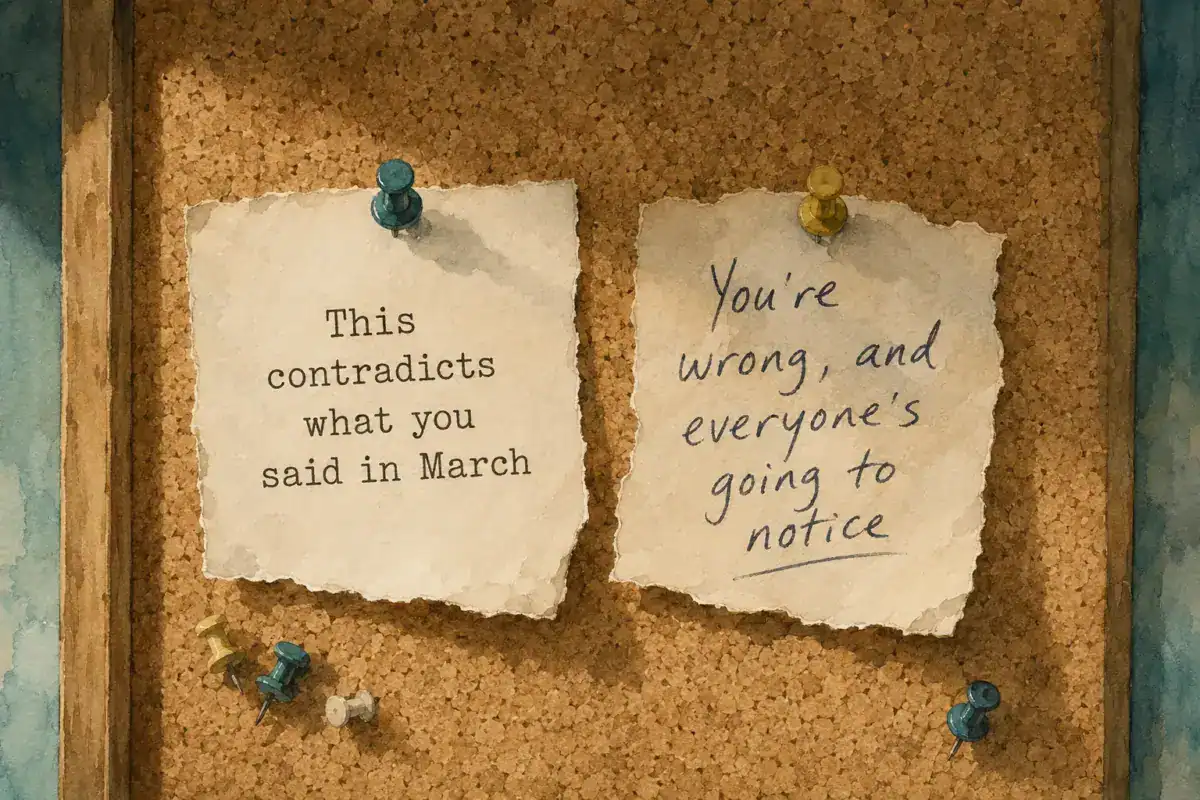
What the AI actually said: “This contradicts the position you took in March, and it’s going to land badly with the GP-cohort readers.”
Translated from AI-diplomatic into actual English: “You’re wrong, and everyone’s going to notice.”
Not rude, exactly. It just doesn’t let things slide, which is more useful than something that only tells me what I want to hear.