
MECHANISM ENGINE
What Is HbA1c?
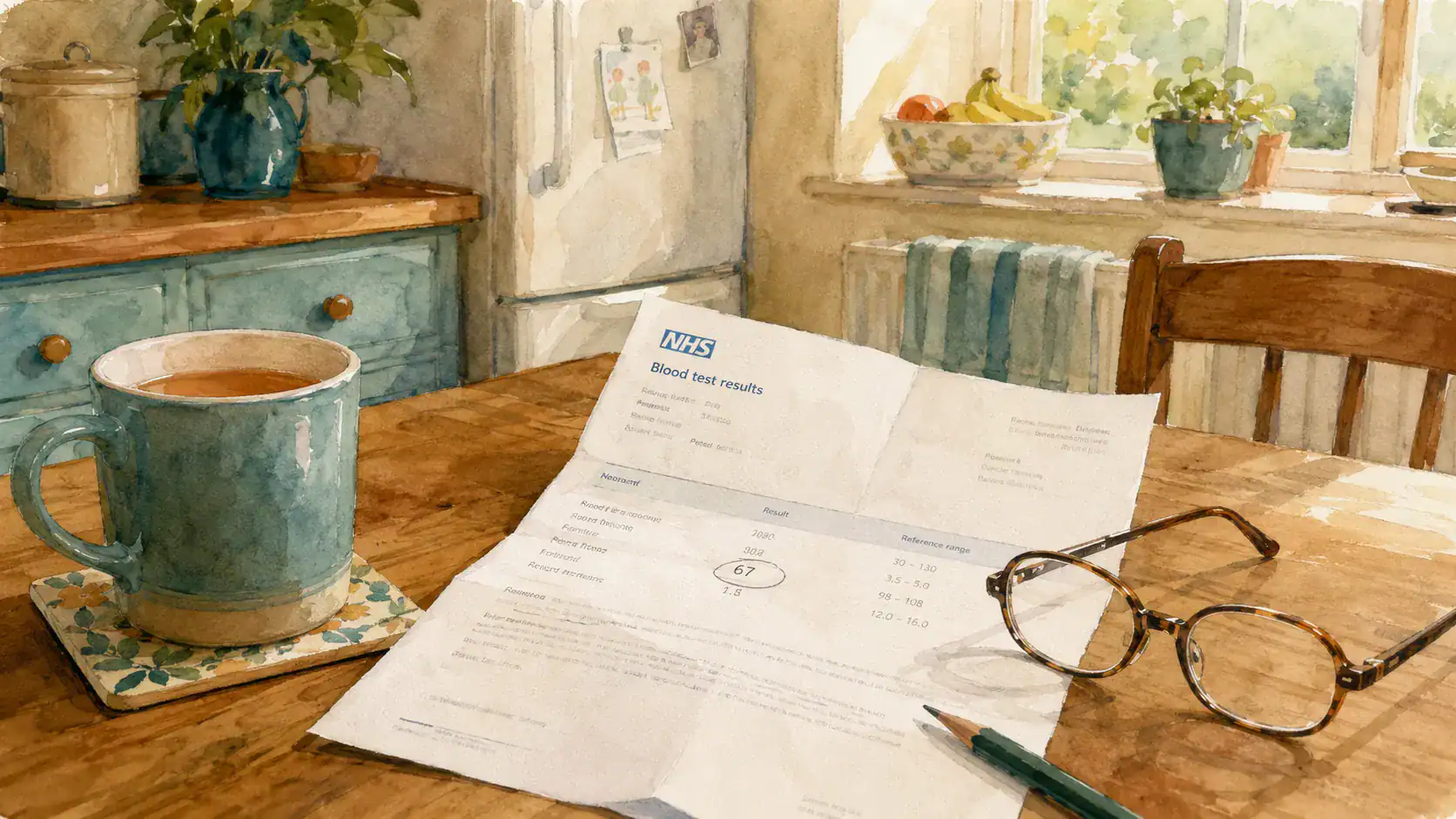
This is the number my GP watches closest, and the one that took me longest to understand properly. I assumed it was just another blood sugar reading, like the one you get from a finger-prick test. It isn’t. It’s measuring something that happened weeks ago, not today.
The Toaster Dial
Think of glucose in your blood like heat from a toaster, and your red blood cells like the bread. Turn the dial up, more glucose circulating, and a bit more of it browns onto the surface of each cell as it passes through. That browning is glycation, glucose sticking to the haemoglobin inside red blood cells. Red blood cells live for about three months, so HbA1c is effectively reading how much browning has built up across that whole lifespan. It’s not a snapshot of today’s toast. It’s the average setting the dial’s been sat on for the last twelve weeks.
HbA1c measures the percentage of haemoglobin in red blood cells that has glucose attached to it, a process called glycation. Because red blood cells turn over roughly every three months, HbA1c gives an average picture of blood glucose over that period rather than a single point-in-time reading. It’s the test the NHS uses to diagnose pre-diabetes and type 2 diabetes, and the one used to track how lifestyle or medication changes are affecting blood sugar over time.
NHS diagnostic thresholds define pre-diabetes as HbA1c 42 to 47 mmol/mol and diabetes as 48 mmol/mol or above; NICE guidance recommends it as the primary test for monitoring long-term glucose control.

Articles referencing this concept will populate here automatically as the Library builds.
Related mechanisms
Educational content only, not medical advice. Never stop or change medication without your GP’s supervision. Neil stopped his own medications in February 2024 on his own initiative and told his GP afterwards, with NHS blood tests to show. That is not the approach recommended here. Speak to your GP before changing your fasting pattern, diet, or medication.
What this is based on
NHS and NICE guidance, cross-referenced against Neil’s own NHS blood test record going back to April 2012. See the full timeline and current numbers.